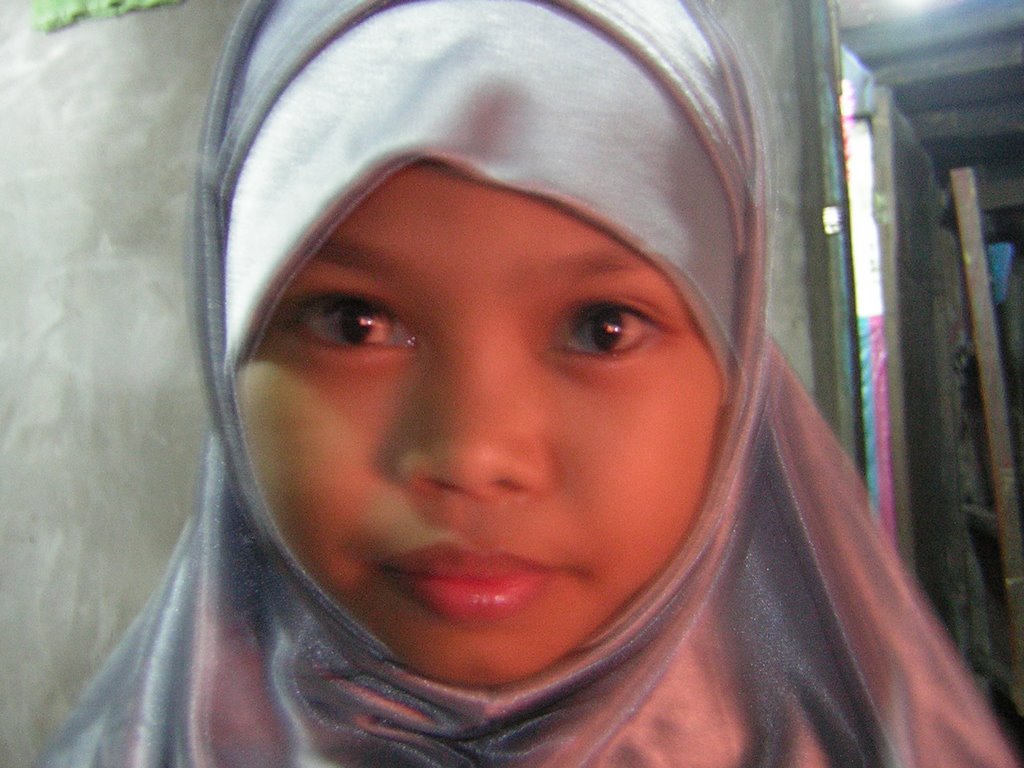
The plight of Filipina domestic workers has been widely written and researched because of the rampant maltreatment and abuse experienced by the women especially in the Middle East. Scholars and human right workers have studied and analyzed the problem in order to provide answers and offer solutions. But no research has been done on a minority population, specifically, the Muslim community. Filling the gap, this research provides an intimate glimpse on the lives of domestic workers in the Middle East who are Muslim Filipinas. The study explores the relationships of Islamic laws, gender attitudes and labor issues from the voices of Muslim Filipinas working in Muslim households in the Middle East. Fifty-six individuals and several Muslim scholars and leaders participated in the study. The women discussed the factors in their decision to work overseas and described their lives working as domestic workers. Mothers of the domestic workers related the experiences of their daughters and sometimes, their own. All of the individuals spoke about their lives as Muslims in the Philippines and the effect of the Mindanao conflict. Majority of Filipinos live in dire poverty but the minority status of Muslim Filipinos exacerbates their condition. Both Muslims and non-Muslim Filipinas leave the Philippines to work as domestic workers in the Middle East. But, Muslim identity and history placed the Muslim Filipinas in a unique and contradictory position. Today, Muslim women scholars such as Amina Wadud and Asma Barlas are reinterpreting the Qur’an and Hadith from a female/liberatory hermeneutics. The overall purpose of this research in addition to providing a voice for the Muslim Filipinas is also to publicize their plight in the Muslim community in order to find allies. Presently, organizations advocating for rights for migrant workers in the Middle East are not developing strategies with an Islamic foundation nor collaborating with Muslim scholars. Current advocacy groups, which rely solely on Western means, deny themselves pragmatic solutions based on greater understanding of Islamic laws and current Muslim scholarship. Transformation of the conditions of the Muslim Filipina domestic workers can eventually lead to improved working and living conditions of all foreign workers in the Middle East.
Muhajirat (female migrants) was established in April 2006 as a response to the result of interviews of 56 Muslim Filipina domestic workers and focus group discussions with Muslim community leaders and scholars from August 2004 to May 2004 funded with a Fulbright Fellowship. Mujahirat is a U.S.-based organization advocating for better working conditions for Muslim Filipina domestic workers in the Middle East. Transnational activism based in the United States in support of social justice in the Philippines had been effective in the past. Mujahirat’s presence in the United States hope to organize Muslim Filipinos and the Muslim community in the United States to advocate for better labor conditions for domestic workers in the Middle East. Advocating for better working conditions for the workers includes education and awareness of the roots of the problems in order to provide appropriate solutions. Hence, this blog will act as the first step in the process……
Muhajirat (female migrants) was established in April 2006 as a response to the result of interviews of 56 Muslim Filipina domestic workers and focus group discussions with Muslim community leaders and scholars from August 2004 to May 2004 funded with a Fulbright Fellowship. Mujahirat is a U.S.-based organization advocating for better working conditions for Muslim Filipina domestic workers in the Middle East. Transnational activism based in the United States in support of social justice in the Philippines had been effective in the past. Mujahirat’s presence in the United States hope to organize Muslim Filipinos and the Muslim community in the United States to advocate for better labor conditions for domestic workers in the Middle East. Advocating for better working conditions for the workers includes education and awareness of the roots of the problems in order to provide appropriate solutions. Hence, this blog will act as the first step in the process……


1 comment:
BISMILLAH
Post a Comment